
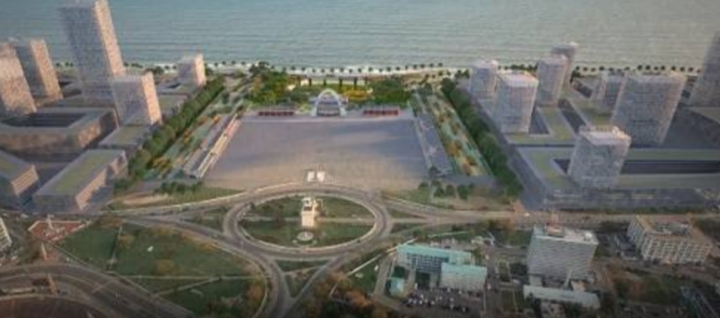
Located along the Atlantic coast in the center of Accra, Ghana’s Marine Drive is rapidly becoming one of the most ambitious waterfront developments in West Africa. Designed as a modern district that blends tourism, business, culture, entertainment, and leisure, the project aims to transform Accra’s shoreline into a world-class destination for visitors, investors, and residents alike.
Seen by many as a landmark urban renewal initiative, Marine Drive represents Ghana’s broader ambition to strengthen its position as a leading tourism and investment hub in Africa. The development is expected to redefine the city’s coastal landscape while contributing significantly to economic growth and cultural promotion.
Reimagining Accra’s Waterfront
The Marine Drive project stretches across a prime section of Accra’s coastline, extending from the Independence Arch toward the Osu Castle area along the Gulf of Guinea. Although this area has long held historical and national importance, much of it remained underutilized for years.
Through this redevelopment initiative, the government and private investors plan to convert the coastline into a vibrant mixed-use district featuring luxury hotels, modern residential spaces, shopping complexes, restaurants, entertainment centers, conference venues, and public recreational parks.
The architectural vision combines modern infrastructure with Ghanaian cultural identity, creating a destination that reflects both innovation and tradition. The goal is not only to attract tourists but also to establish a lively urban environment that residents can enjoy year-round.
Boosting Tourism and Economic Growth
Tourism has become an increasingly important part of Ghana’s economy, particularly following successful campaigns such as the “Year of Return” and “Beyond the Return,” which attracted members of the African diaspora and international travelers to the country.
Marine Drive is expected to build on this momentum by providing high-quality facilities capable of supporting large-scale tourism and international events. Officials believe the project will create employment opportunities in sectors including hospitality, construction, transportation, retail, and entertainment.
The development is also likely to stimulate local businesses by increasing visitor activity and encouraging investment in nearby communities. As interest in African tourism continues to grow globally, Ghana hopes Marine Drive will strengthen Accra’s reputation as one of the continent’s leading travel destinations.
A Celebration of Ghanaian Culture
A major aspect of the Marine Drive concept is its focus on culture and creativity. Rather than becoming just another commercial waterfront, the project aims to showcase Ghana’s heritage, music, fashion, cuisine, and arts.
Plans for the district include event spaces, cultural centers, live entertainment venues, and beachfront attractions that highlight the country’s vibrant creative industries. Accra’s growing reputation as a center for music and nightlife could make Marine Drive a key location for festivals, concerts, and international cultural gatherings.
Public spaces such as promenades, gardens, and open-air recreational areas are also expected to encourage community interaction while offering scenic views of the Atlantic Ocean.
Urban Development and Infrastructure Improvement
Beyond tourism and entertainment, Marine Drive is part of a larger effort to modernize Accra’s infrastructure and improve urban planning. As the city continues to expand rapidly, investments in roads, drainage systems, lighting, sanitation, and public facilities are becoming increasingly important.
The project is expected to improve the surrounding environment while addressing long-standing issues such as coastal erosion and inadequate public amenities. Supporters believe the development could serve as a model for future urban renewal projects across West Africa.
Challenges Facing the Project
Despite its promise, Marine Drive faces several obstacles. Large-scale infrastructure projects often encounter delays related to financing, land management, and construction. There are also concerns about environmental sustainability and ensuring that local communities directly benefit from the development.
Some critics argue that the project must avoid becoming an exclusive luxury zone that limits public access or overlooks the needs of ordinary residents. Achieving a balance between commercial success and social inclusion will be essential to the project’s long-term impact.
Economic conditions, including inflation and changing investment trends, may also influence the pace of development.
A New Identity for West African Tourism
Marine Drive reflects a broader transformation taking place in African cities, where governments are increasingly investing in modern infrastructure, tourism, and cultural branding. The project demonstrates Ghana’s confidence in its future and its desire to compete with major global destinations.
Accra already stands out for its rich history, political stability, creative energy, and welcoming atmosphere. With the addition of Marine Drive, the city could further strengthen its position as one of Africa’s most attractive coastal destinations.
Conclusion
Ghana’s Marine Drive is set to become a landmark development that combines economic opportunity, cultural expression, and urban modernization. By transforming Accra’s coastline into a vibrant waterfront district, the project has the potential to reshape tourism in West Africa and elevate Ghana’s global profile.
Although challenges remain, Marine Drive symbolizes a new era of ambition and development in Africa one focused on innovation, culture, and sustainable urban growth.

