
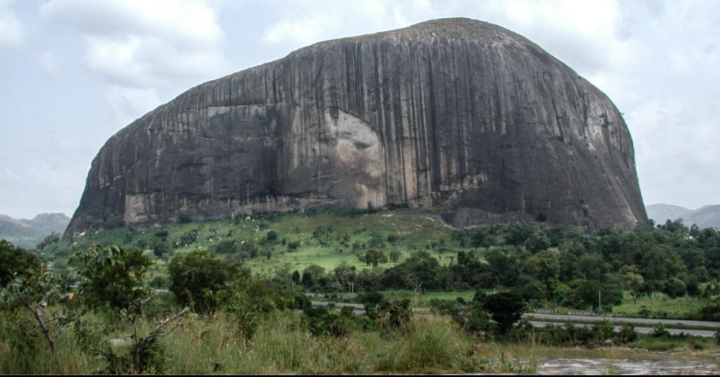
Zuma Rock is one of Nigeria’s most famous natural landmarks, standing boldly above the landscape of Niger State near Abuja. Known for its impressive size, unusual appearance, and cultural significance, the massive rock formation attracts tourists, photographers, and adventure enthusiasts from different parts of the country.
Key Facts About Zuma Rock
Located near Madalla along the Abuja–Kaduna highway, Zuma Rock is a giant natural rock formation made from igneous rocks. It rises hundreds of metres above the surrounding area and is regarded as one of Nigeria’s most remarkable geological features.
The landmark is often described as the “gateway to Abuja” because of its location on a major route leading into the nation’s capital. Its image has also appeared on Nigeria’s currency, reflecting its importance as a national symbol.
One of the features that makes Zuma Rock unique is the appearance of a human face on its surface. The natural patterns on the rock resemble facial features, including eyes, a nose, and a mouth, which has inspired many stories and interpretations over the years.
Myths and Beliefs About Zuma Rock
Zuma Rock has long been connected with local traditions and spiritual beliefs among communities living around it. Some people consider the rock sacred and believe it has protective powers, while others associate its unusual appearance with ancestral or spiritual significance.
Various legends have also surrounded the rock, including stories about mysterious events occurring around it. Some accounts claim that unusual sights or sounds from the rock are signs of supernatural activity, though many of these claims remain part of folklore rather than proven facts.
Experts, however, explain that Zuma Rock’s appearance and features are the result of natural geological processes that shaped the formation over millions of years. The face-like pattern is generally considered a natural occurrence created by erosion and the arrangement of the rock’s surface.
Hiking and Visiting Zuma Rock
A trip to Zuma Rock provides visitors with opportunities for sightseeing, photography, and outdoor exploration. Due to the steep and rocky nature of the formation, climbing the rock can be challenging and should only be attempted with proper guidance and preparation.
Many visitors choose to explore the area around the base of the rock, where they can enjoy views of the landmark and learn about its history and cultural importance.
Tips for a Safe Zuma Rock Visit
Go with an experienced local guide, especially if planning any form of hiking activity.
Wear comfortable, strong footwear suitable for rocky surfaces.
Visit early in the day to avoid extreme heat and enjoy better views.
Carry enough water and other basic supplies for outdoor activities.
Show respect for local traditions and the cultural importance of the site.
Best Period to Visit
The dry season, usually between November and March, is considered a favourable time to visit Zuma Rock because of the lower chances of rainfall and clearer skies. Early mornings and evenings are ideal for photography as the sunlight enhances the beauty and details of the rock.
Importance of Zuma Rock
Beyond being a natural attraction, Zuma Rock represents Nigeria’s rich combination of geology, culture, and history. Whether admired as a scenic landmark, a subject of local legends, or a destination for adventure, the rock remains one of the country’s most treasured natural wonders.

