
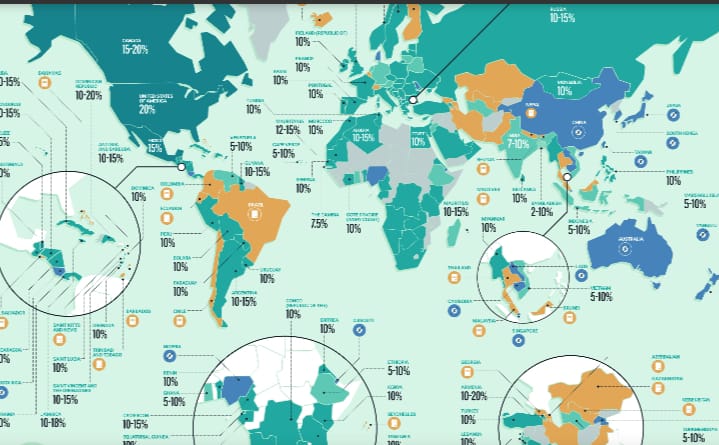
Tipping practices differ significantly around the world, and something considered courteous in one place might be unnecessary or even frowned upon in another. Knowing these differences can help you avoid uncomfortable situations and show appreciation in the right way.
North America: Standard Practice
In the United States and Canada, tipping is a normal and expected part of service culture. Many workers depend on tips as a key portion of their earnings.
- Restaurants: typically 15–25%
- Bars: around $1–2 per drink or 15–20%
- Taxis & delivery: about 10–15%
Failing to tip is generally viewed negatively unless the service was poor.
Europe: Moderate and Often Included
In much of Europe, service charges are often already added to bills, so tipping is less of an obligation.
- In France and Germany, people usually round up or leave around 5–10%
- In United Kingdom, a service fee of about 10–12.5% is often included
Here, tipping is more of a gesture of appreciation than a requirement.
East Asia: Generally Not Practiced
In Japan and South Korea, tipping is uncommon and sometimes discouraged.
Providing excellent service is seen as a standard responsibility, and leaving extra money may be misunderstood or politely declined. Courtesy and respect are preferred ways to express gratitude.
China: Gradually Changing
In China, tipping has not traditionally been part of the culture, though it is slowly gaining acceptance in luxury hotels and tourist-focused settings. Still, it is not widely expected.
Southeast Asia: Situational
In places like Thailand and Indonesia, tipping depends on the context.
- Small tips or rounding up are appreciated
- Higher-end establishments may already include a service charge
It’s optional but generally welcomed.
Middle East: Appreciated Extras
In countries such as United Arab Emirates, service charges are often included, but leaving a small additional tip (around 5–10%) is common.
For taxis and hotel services, rounding up the fare is typical.
Africa: Mixed Practices
Across Africa, tipping customs vary widely. In Nigeria, it is not strictly expected but is becoming more common, especially in cities and hospitality settings.
- Restaurants: about 5–10% if no service charge is added
- Hotels: small tips for staff are appreciated
In tourist-heavy areas, such as safari destinations, tipping guides and staff is more customary.
Oceania: Mostly Optional
In Australia and New Zealand, tipping is not a strong cultural norm because service workers typically earn higher wages.
People may leave a small tip for outstanding service, but it is not expected.
Key Takeaway
Tipping customs are shaped by local economic systems and cultural norms.
- Some countries expect it
- Others treat it as optional
- A few discourage it altogether
When in doubt, observing locals or asking politely is the safest approach.

