
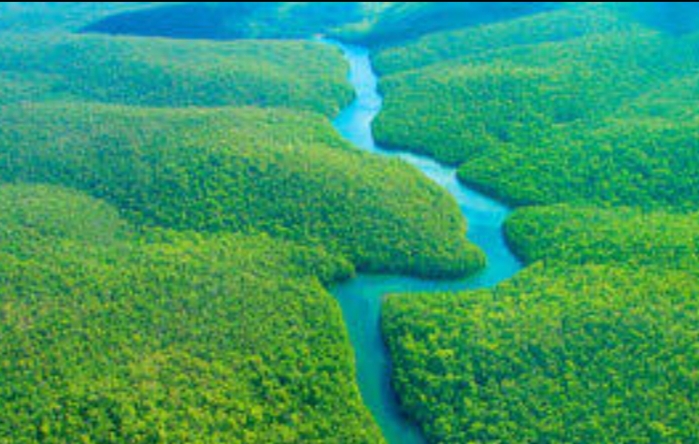
The Amazon Rainforest is one of the most remarkable natural regions on Earth. Stretching across countries such as Brazil, Peru, and Colombia, it is the largest tropical rainforest in the world. Renowned for its rich biodiversity and environmental significance, it is often called the “lungs of the Earth.”
A Rich and Complex Ecosystem
The Amazon covers an immense area and supports a vast range of plant and animal life. It is believed to contain around 10% of the world’s known species. The forest is structured in layers, from the ground level to the dense canopy above, each providing unique habitats for different organisms.
It is also home to countless plant species, many of which have medicinal value. A large number of these plants and animals are unique to the region, making the Amazon an important center of global biodiversity.
Wildlife in the Amazon
The rainforest hosts an incredible variety of wildlife. Notable species include the Jaguar, the Amazon river dolphin, and the Sloth. Brightly colored birds like the Macaw and the Toucan are also common.
Reptiles and amphibians thrive in the humid climate, including the Green anaconda and various species of poison dart frogs. The rivers are equally rich in life, containing thousands of fish species.
The Amazon River System
At the center of this ecosystem flows the Amazon River, one of the most powerful rivers globally. It is the second-longest river and carries the largest volume of water. This river system is vital for transportation, supports diverse aquatic life, and sustains communities living nearby.
It also plays an essential role in maintaining the region’s environmental balance.
Indigenous Peoples and Their Lifestyle
The Amazon is home to many indigenous groups who have lived there for generations. These communities possess deep knowledge of the forest and depend on it for survival. Their culture, traditions, and daily lives are closely connected to nature.
Their sustainable practices demonstrate how humans can coexist with the environment without causing harm.
Environmental Significance
The Amazon Rainforest is crucial for the health of the planet. Through Photosynthesis, its vegetation absorbs carbon dioxide and releases oxygen, helping to regulate the Earth’s atmosphere. It also influences rainfall patterns across different regions.
Because of these roles, the Amazon is one of the most important ecosystems in the world.
Threats Facing the Amazon
Despite its importance, the rainforest is under threat. Activities such as deforestation, agriculture, and mining are leading to large-scale destruction of forest areas. Climate change and forest fires further increase the risk to this fragile ecosystem.
These threats endanger wildlife, disrupt ecosystems, and affect indigenous populations.
Efforts to Protect the Amazon
Various conservation initiatives are being implemented to safeguard the Amazon. Governments, environmental organizations, and local communities are working together to reduce deforestation and promote sustainable land use practices.
Protecting the Amazon is essential for preserving its biodiversity and maintaining global environmental stability.
Conclusion
The Amazon Rainforest remains one of the world’s most valuable natural treasures. Its incredible biodiversity, powerful river systems, rich cultures, and environmental importance make it truly unique. Preserving this ecosystem is a shared global responsibility, as its survival is closely linked to the future of our planet.

