
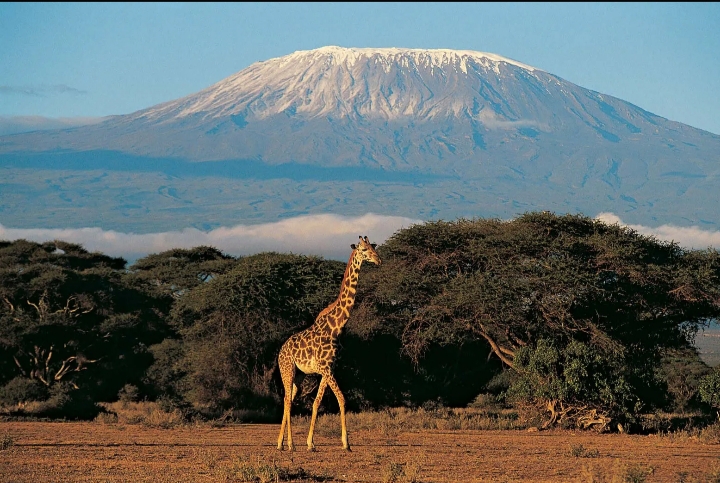
Located in northeastern Tanzania, Mount Kilimanjaro is Africa’s highest mountain and one of the most famous natural attractions in the world. It rises to about 5,895 meters (19,341 feet) above sea level and is recognized as the tallest free standing mountain globally, as it stands alone rather than forming part of a range. Its snow covered peak, close to the equator, has long attracted explorers and visitors alike.
Physical Characteristics and Environment
Mount Kilimanjaro is a dormant volcano made up of three cones: Kibo, Mawenzi, and Shira. Kibo is the largest and contains Uhuru Peak, the mountain’s highest point. The mountain lies within Kilimanjaro National Park, a protected area celebrated for its unique wildlife and natural beauty.
A notable feature of Kilimanjaro is its range of ecosystems. As one climbs higher, the environment changes dramatically from farmland to dense rainforest, then to open moorlands, and finally to a cold, rocky summit covered in ice. This variety makes the mountain especially unique.
Tourism and Climbing Experience
Mount Kilimanjaro is a leading destination for trekkers worldwide. It is considered a non technical climb, meaning that climbers do not need specialized mountaineering skills, though good fitness is essential. Popular routes like Marangu, Machame, and Lemosho offer different paths to the summit, each with its own scenery and level of challenge.
Thousands of people attempt the climb every year. The journey usually takes between five and nine days, giving climbers time to adjust to the altitude. Reaching Uhuru Peak is a rewarding experience, offering stunning views across the surrounding landscape.
Cultural Value and Environmental Concerns
The mountain is deeply important to local communities, especially the Chagga people who inhabit its lower slopes. It supports agriculture, provides water resources, and generates income through tourism.
However, Mount Kilimanjaro is facing environmental threats. Its glaciers are shrinking rapidly due to climate change, and experts warn they may vanish in the future if the trend continues. This highlights the need for stronger conservation efforts.
Mount Kilimanjaro is not only the highest point in Africa but also a remarkable symbol of nature, exploration, and environmental change. With its striking landscapes, ecological diversity, and cultural relevance, it remains one of the world’s most treasured landmarks, inspiring people from around the globe to experience its beauty.

