
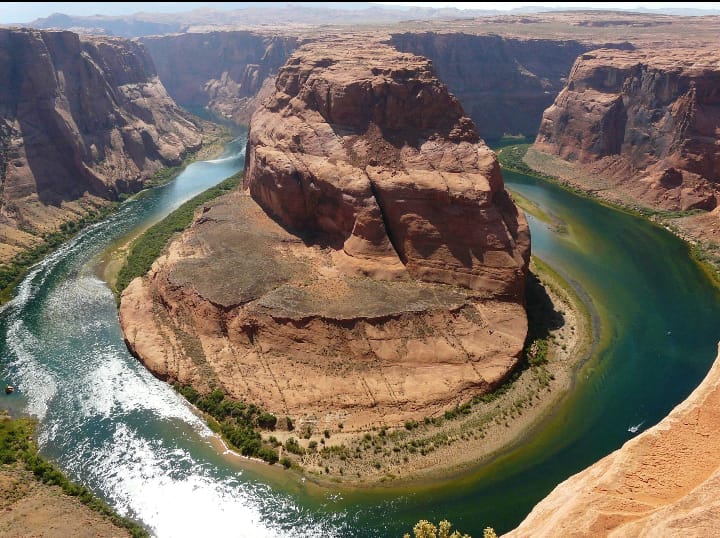
The Grand Canyon is one of the most famous natural landmarks in the United States, celebrated for its awe-inspiring scenery, geological importance, and cultural history. Situated in northern Arizona, the canyon stretches around 277 miles (446 km) long, up to 18 miles (29 km) wide, and plunges more than a mile (1,857 meters) deep in places. Its vast scale and intricate formations make it a symbol of both beauty and scientific fascination.
A Geological Treasure
The Grand Canyon reveals nearly two billion years of Earth’s history through its layered rock formations—from ancient Vishnu Schist at the base to the younger Kaibab Limestone at the rim. Shaped over millions of years by the Colorado River, the canyon showcases dramatic cliffs, terraces, and side valleys, highlighting the forces of erosion and tectonics.
Rich Biodiversity
Though it appears arid, the Grand Canyon supports diverse ecosystems. Its elevation changes create habitats for desert plants, wildflowers, bighorn sheep, and condors. Riparian zones along the Colorado River harbor willows, cottonwoods, and aquatic life, making it an important site for ecological study and wildlife observation.
Cultural and Historical Importance
For thousands of years, Native American tribes such as the Havasupai, Hopi, and Navajo have lived in and around the canyon. Their deep spiritual and cultural connections remain visible today through ancestral sites and artifacts. Visitors can explore this heritage through cultural centers and guided tours offered throughout the park.
Tourism and Recreation
Established as Grand Canyon National Park in 1919, the Grand Canyon draws millions of visitors annually. Hiking, rafting, and helicopter tours offer different ways to experience its grandeur. The South Rim provides year-round access to popular viewpoints like Mather Point and Yavapai Observation Station, while the North Rim offers a quieter, more rugged adventure.
Protecting a Natural Icon
Conservation is vital to preserving the Grand Canyon’s beauty. The National Park Service works to protect its landscapes, wildlife, and waterways while promoting sustainable tourism. Visitors are encouraged to minimize their impact by following eco-friendly practices, ensuring the canyon remains unspoiled for generations to come.
Conclusion
The Grand Canyon is a striking reminder of nature’s power and the passage of time. Its spectacular views, geological marvels, and rich cultural history make it a true American treasure. Whether admired from the rim, explored on the river, or studied by scientists, the Grand Canyon continues to inspire wonder and respect for the natural world.

