
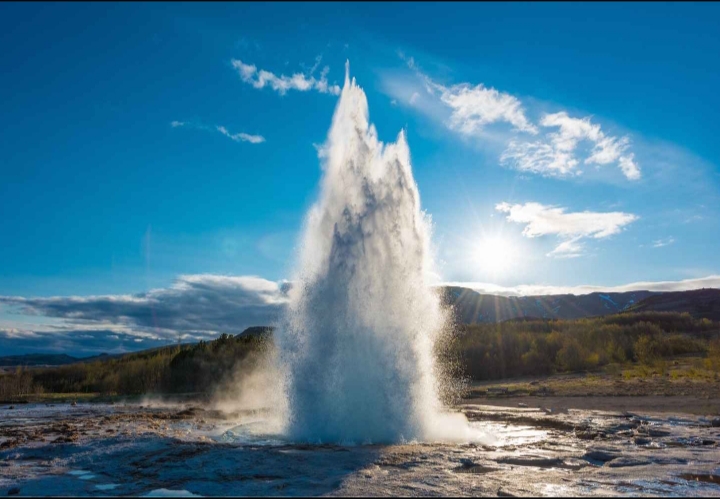
Iceland, often called the land of fire and ice, is a country of stunning contrasts where glaciers meet volcanic terrain, waterfalls cascade into deep valleys, and geothermal springs bubble from the earth. Beyond its cultural and urban attractions, Iceland’s dramatic landscapes make it a top destination for nature lovers and adventure seekers. From ice caves and glaciers to volcanoes and hot springs, the island offers experiences unlike anywhere else on the planet.
Glaciers and Ice Fields
Iceland is home to some of Europe’s largest glaciers, covering roughly 11% of the country. Vatnajökull Glacier, Europe’s biggest glacier, is a prime destination for exploring ice caves, hiking on its frozen expanse, or joining guided tours across its vast surface. Smaller glaciers, such as Langjökull Glacier, also offer snowmobiling and ice climbing, allowing travelers to experience Iceland’s icy landscapes up close.
Volcanoes and Lava Landscapes
Sitting atop the Mid Atlantic Ridge, Iceland is highly geologically active. Its volcanoes and lava fields create otherworldly landscapes. Hekla Volcano, one of the country’s most renowned volcanoes, has erupted many times over the centuries. Visitors can hike near volcanic craters, explore lava plains, and witness firsthand the power of Iceland’s volcanic history.
Waterfalls and Rivers
Iceland is famous for its breathtaking waterfalls. Gullfoss Waterfall is a two tiered cascade plunging into a rugged canyon, creating spectacular mist and rainbows. Seljalandsfoss allows visitors to walk behind the waterfall, offering a unique perspective. Many rivers flow through volcanic terrain, forming rapids and unusual natural features along the way.
Geothermal Springs and Hot Pools
Iceland’s geothermal activity produces natural hot springs, geysers, and mud pools. Geysir Hot Springs is where the term “geyser” originates, with Strokkur erupting every few minutes. The Blue Lagoon offers a famous geothermal spa experience, where visitors can relax in warm, mineral rich waters amid volcanic landscapes.
National Parks and Wildlife
Iceland’s national parks protect its unique landscapes and wildlife. Þingvellir National Park combines historical significance as the site of Iceland’s first parliament with geological wonders like its rift valley. Snæfellsjökull National Park features glaciers, lava fields, and volcanic peaks, famously inspiring Jules Verne’s Journey to the Center of the Earth. Visitors may also encounter puffins, Arctic foxes, and seals along the coastline.
Northern Lights
The Aurora Borealis is one of Iceland’s most enchanting natural spectacles. During winter, the night skies are illuminated with shimmering greens, purples, and pinks. Remote areas with minimal light pollution provide the best conditions to witness this mesmerizing phenomenon.
Tips for Exploring Iceland
To fully enjoy Iceland’s wilderness, travelers should plan carefully:
1.Monitor weather and road conditions, as the climate can be unpredictable.
2.Dress in layers and wear waterproof gear for outdoor adventures.
3.Join guided tours for glacier hikes, volcano treks, or ice cave exploration for safety.
4.Respect conservation rules and protected areas to preserve Iceland’s fragile ecosystems.
Iceland offers a rare blend of glaciers, volcanoes, waterfalls, and geothermal wonders. Its breathtaking landscapes and unique natural phenomena make it a paradise for adventurers, photographers, and nature enthusiasts. Exploring Iceland is more than sightseeing it’s an immersive experience in one of the world’s most extraordinary natural environments.

