
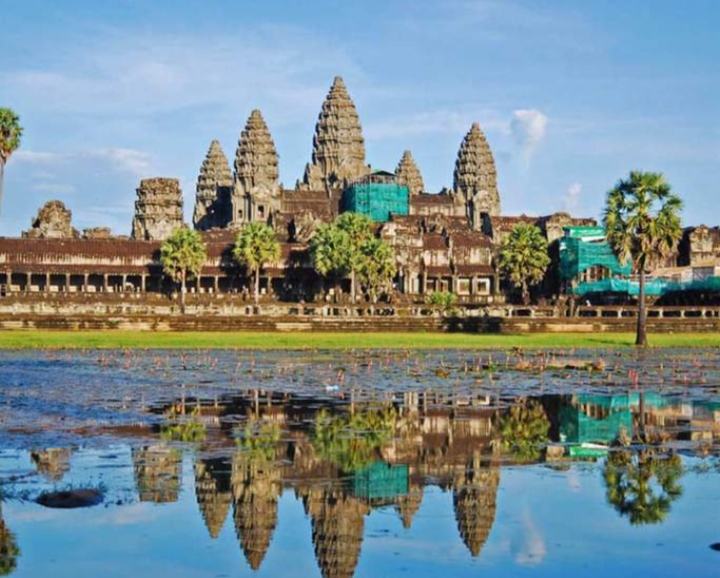
Located near Siem Reap, Cambodia, Angkor Wat is the world’s largest religious monument and a stunning symbol of the Khmer Empire’s architectural brilliance and spiritual devotion. Its historical importance and breathtaking beauty make it a top destination for travelers from around the globe.
A Glimpse into History and Culture
Constructed in the early 12th century by King Suryavarman II, Angkor Wat was originally a Hindu temple honoring Vishnu, later becoming a prominent Buddhist site. Its design reflects advanced Khmer engineering, with towering lotus shaped spires, detailed bas reliefs, and a layout inspired by cosmic symbolism.
Discovering the Temple
Angkor Wat is part of the extensive Angkor Archaeological Park, home to hundreds of temples. Highlights include:
1.Central Tower – Representing Mount Meru, the sacred mountain in Hindu cosmology.
2.Bas-Reliefs – Stone carvings illustrating epics like the Ramayana and Mahabharata, along with historical events.
3.Moats and Corridors – Ingeniously designed waterways and galleries surrounding the temple.
While Angkor Wat alone can take a full day to explore, visitors often spend several days exploring nearby temples such as Bayon, with its smiling stone faces, and Ta Prohm, famous for trees growing through its ruins.
Visiting Tips
1.Catch Sunrise or Sunset – Sunrise reflects beautifully in the temple moat, while sunset offers warm, golden lighting.
2.Dress Modestly – Cover shoulders and knees to respect the sacred site.
3.Hire a Local Guide – Guides provide insights into Khmer history, mythology, and architecture.
4.Stay Comfortable – Bring water, sun protection, and light clothing for Cambodia’s tropical climate.
5.Explore Lesser Known Temples – Sites like Banteay Srei, with its intricate pink sandstone carvings, are worth visiting.
Why Angkor Wat Is Special
More than just an architectural masterpiece, Angkor Wat reflects Cambodia’s resilience and creativity. Wandering its corridors, seeing the giant faces of Bayon, or the roots of Ta Prohm, visitors experience the harmony of human craftsmanship and nature.
Whether interested in history, photography, or cultural exploration, Angkor Wat offers an unforgettable journey through time, faith, and artistry. Visiting it is stepping into the living legacy of a civilization that continues to captivate the world.

