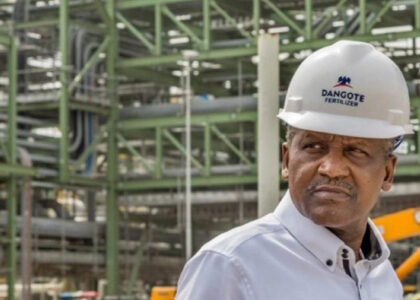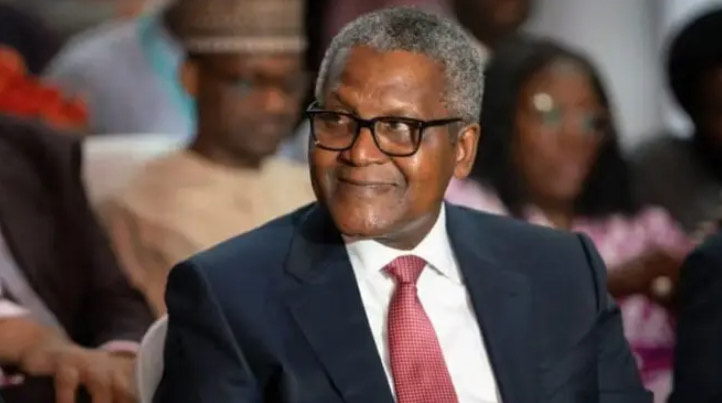
Africa’s richest man and President of the Dangote Group, Aliko Dangote, has accused the Nigerian Union of Petroleum and Natural Gas Workers (NUPENG) of imposing illegal charges on fuel trucks loading from the Dangote Petroleum Refinery. He alleged that the union collects as much as ₦50,000 per truck, warning that such practices inflate fuel prices at the pump and place additional burdens on Nigerian consumers already struggling with high living costs.
Dangote’s revelation has stirred a fresh debate about transparency, accountability, and the role of trade unions in Nigeria’s downstream oil sector. The allegation comes at a critical time when the Dangote Refinery, Africa’s largest integrated petrochemical complex, is beginning to influence fuel distribution in Nigeria and across West Africa.
Speaking on the refinery’s distribution challenges, Dangote described the charges as exploitative and counterproductive to the government’s efforts to stabilize fuel prices. According to him, truck operators and marketers are compelled to pay ₦50,000 per truck as loading fees imposed by union operatives before leaving the refinery gates.
With thousands of trucks lifting fuel daily from the 650,000-barrel-per-day refinery, the cumulative effect of such levies runs into billions of naira monthly. These costs, Dangote explained, are ultimately transferred to consumers in the form of higher pump prices.
With fuel prices already hovering around record highs since the removal of subsidy, Dangote’s warning underscores how hidden charges further worsen inflationary pressures in the economy.
NUPENG’s Role in the Oil and Gas Sector
NUPENG is one of Nigeria’s most influential labor unions, representing oil workers, tanker drivers, and refinery staff. Historically, the union has been known for its activism, often threatening strikes that paralyze fuel supply chains nationwide.
While the union officially claims to protect workers’ rights and welfare, Dangote’s allegation suggests a darker side of its operations—one where union officials allegedly use their influence to extract levies from operators.
Energy experts argue that while unions play legitimate roles in labor advocacy, imposing unauthorized charges on businesses is detrimental to the economy.