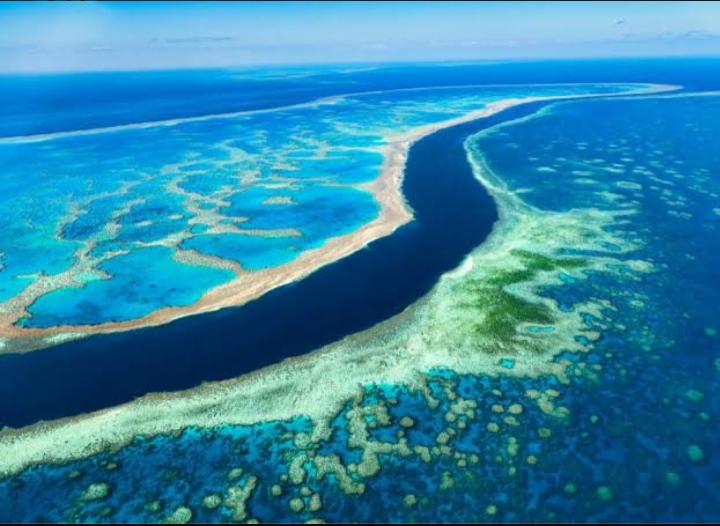
Situated off the northeast coast of Australia, the Great Barrier Reef is the world’s biggest coral reef system, extending over 2,300 kilometers (1,430 miles) and covering nearly 344,000 square kilometers. As a UNESCO World Heritage Site, it is renowned for its stunning natural beauty and remarkable diversity of marine life.
Marine Life and Habitats
The reef hosts over 1,500 species of fish, 400 types of coral, and countless other marine creatures, including sea turtles, sharks, and dugongs. Its intricate reef formations create diverse habitats, ranging from shallow lagoons to deep ocean channels, offering shelter, food, and breeding areas. Coastal mangroves and seagrass beds further contribute to the reef’s ecological richness.
Tourism and Economic Value
The Great Barrier Reef is a world-famous tourist destination, attracting millions of visitors annually for activities such as snorkeling, scuba diving, and guided marine tours. Tourism brings in billions of dollars to the Australian economy and supports thousands of jobs. The reef also supports fisheries and scientific research, providing valuable resources for ecological studies and food security.
Environmental Threats
Despite its global importance, the reef faces significant threats. Rising ocean temperatures have caused widespread coral bleaching, while pollution, overfishing, and coastal development place additional pressure on its ecosystems. Climate change remains the greatest challenge, affecting water temperatures, ocean acidity, and storm intensity, all of which can damage corals.
Conservation efforts include establishing marine protected areas, promoting sustainable tourism, and conducting coral restoration research. Cooperation among government bodies, local communities, and conservation groups is vital to safeguard this natural wonder for the future.
The Great Barrier Reef is not only a breathtaking natural landmark but also a crucial ecological and economic resource. Its exceptional biodiversity, unique habitats, and cultural significance make it a global treasure. Protecting the reef from environmental threats is essential to ensure it continues to thrive and inspire generations worldwide.